








These easy homemade corn tortillas require just three ingredients and deliver soft, pliable texture with real corn flavor. Simple to make and far better than store-bought, they’re perfect for tacos, enchiladas, or enjoying warm straight from the skillet.
Let's get started!
Jump to:
- Pull Up A Chair & Let's Chat!
- What You'll Need & Why
- Tools of the Trade
- How To Make Them
- When To Use Corn vs. Flour Tortillas
- Variations and Smart Swaps
- Tips for Soft, Flexible Corn Tortillas
- Homemade Corn Tortillas Recipe
- Favorite Ways to Use Homemade Corn Tortillas
- Storage & Reheating
- You Asked, I Answered
- You'll Also Love
- Who’s Stirring the Pot?

Pull Up A Chair & Let's Chat!
If you’ve never made homemade corn tortillas before, let this be the recipe that changes that. With just three simple ingredients and a method that’s easier than most people expect, you can create tortillas that are tender, flexible, and full of real corn flavor.
The difference is immediate — warm tortillas that fold without cracking, taste deeply authentic, and make anything you wrap in them better. Once you see how approachable the process is, store-bought versions start to feel more like a backup plan than the standard.
From tacos and enchiladas to freshly fried chips, these tortillas prove that from-scratch cooking doesn’t have to be complicated to be incredibly rewarding.
Why These Corn Tortillas Belong in Your Rotation
- Remarkably simple: Just three ingredients stand between you and truly homemade tortillas.
- Soft and foldable: Designed to bend without cracking so every taco stays intact.
- Beginner-friendly: A forgiving dough that doesn’t require advanced skills or specialty equipment.
- Authentic flavor: Fresh masa brings a depth you simply won’t find in packaged tortillas.
- Versatile: Perfect for tacos, enchiladas, tostadas, or frying into chips when the craving hits.
What You'll Need & Why
- Masa harina: Be sure you’re using masa harina — not cornmeal or standard corn flour. True masa is made from nixtamalized corn (corn treated with lime), which is what gives corn tortillas their signature flavor, aroma, and structure.
- Hot water: The water should be very warm to the touch, as this helps properly hydrate the masa and creates a smooth, workable dough. The exact amount may vary slightly depending on the brand you use.
- Kosher salt: Enhances the natural sweetness of the corn and balances the overall flavor without overpowering it.

Tools of the Trade
I’m not much of a gadget person, but when it comes to homemade corn tortillas, a good tortilla press is absolutely worth having. A cast iron press makes shaping effortless and gives you evenly pressed, consistently round tortillas every time.
While wooden versions are available, cast iron is my preference for one simple reason — reliability. It’s sturdy, presses beautifully, and holds up for years without fuss. If you’re going to add one specialty tool to your kitchen, this is one that truly earns its space.
 Buy Now →
 How To Make Them
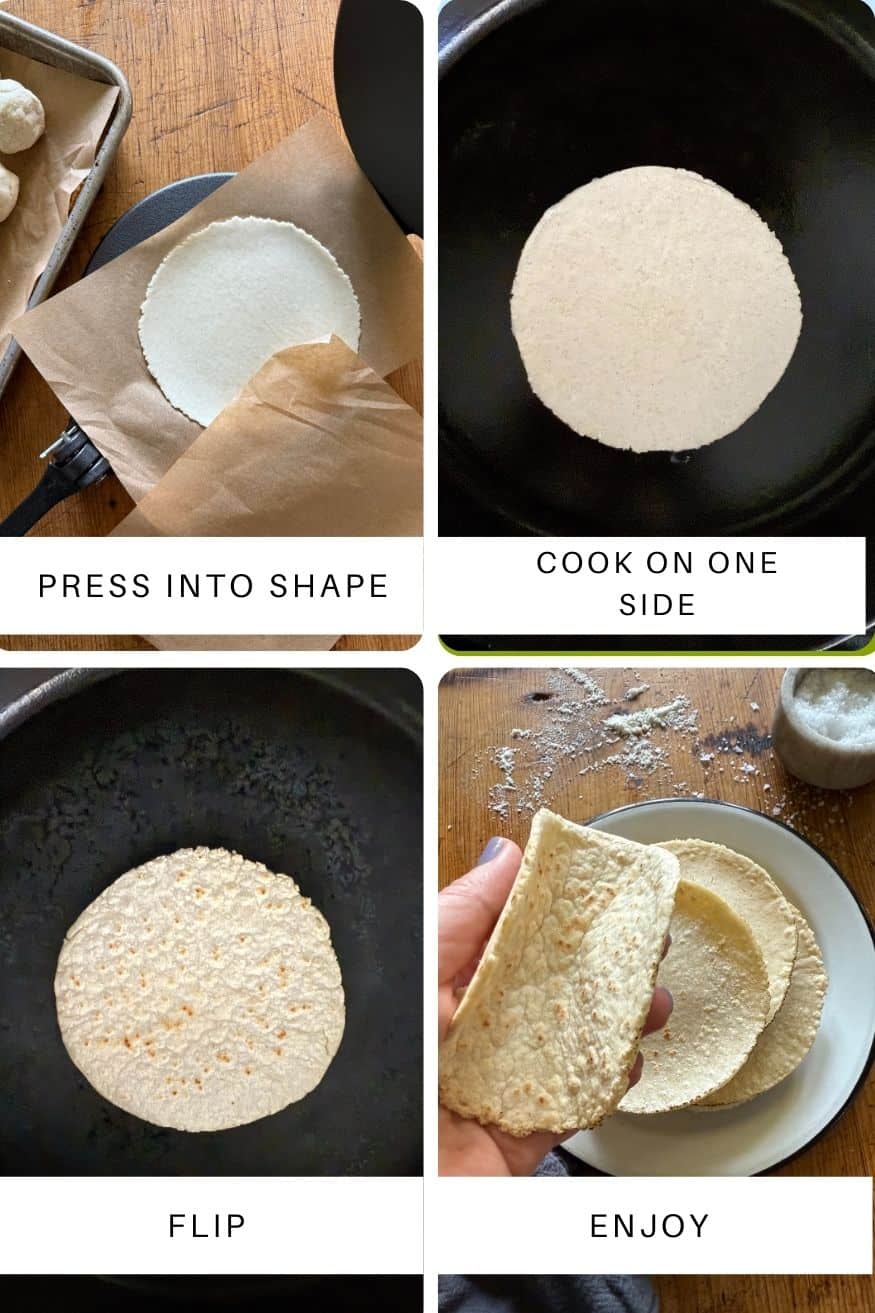
Making homemade corn tortillas is so very easy. I'll give you the brief rundown of the festivities here, but the specifics will live in the recipe card below. All you have to do is:

When To Use Corn vs. Flour Tortillas
Both have their place in a well-stocked kitchen, and once you start making them from scratch, you may find yourself reaching for each more often than you expected.
Flour tortillas are sturdy, flexible, and perfect when you need something that can hold generous fillings. Think burritos, quesadillas, and fajitas — meals where structure matters just as much as flavor.
Corn tortillas, on the other hand, lean more traditional in Mexican cooking. They shine in street tacos, enchiladas, seafood tacos, and classics like chilaquiles. Their distinct corn flavor adds another layer to whatever you’re serving.
At the end of the day, there’s no hard rule — use what you love and what fits the meal best. Homemade tortillas of any kind are always the right choice.
Variations and Smart Swaps
With just three ingredients, corn tortillas are beautifully simple — but there are still a few ways to tailor them to your preferences.
- Try different types of masa: White, yellow, and blue masa all work well. Flavor differences are subtle, so the choice mostly comes down to visual preference.
- Adjust the thickness: Press them thinner for delicate street-style tacos or slightly thicker when you want something sturdy enough for heartier fillings.
- Make them mini or full-size: Smaller tortillas are perfect for tacos, while larger ones work beautifully for enchiladas or folding.
- Add gentle flavor: A small pinch of granulated garlic or onion powder can add depth without distracting from the natural corn flavor.
- Control the salt: If your fillings are heavily seasoned, you can reduce the salt slightly and let the toppings shine.
- Keep it classic: Traditional corn tortillas rely on simplicity — masa, water, salt, and technique. Sometimes the best variation is none at all.
Tips for Soft, Flexible Corn Tortillas
A few small techniques make the difference between tortillas that crack and tortillas that fold beautifully.
- Let the dough rest: Even 10 minutes allows the masa to fully hydrate, creating a smoother dough that presses more easily.
- Know how the dough should feel: It should be soft and similar to Play-Doh — not sticky and not crumbly. If it cracks at the edges, add a teaspoon of water at a time until it becomes pliable.
- Use the right masa harina: Don’t substitute cornmeal or standard corn flour. True masa harina is made from nixtamalized corn, which is essential for proper flavor and structure.
- Keep them warm: A tortilla warmer or clean kitchen towel traps steam, helping the tortillas stay soft and flexible after cooking.
- Watch your thickness: Too thin and they tear, too thick and they turn dense. Aim for an even press so they cook uniformly.
- Cook on properly heated surface: A hot skillet helps develop those classic golden spots while keeping the interior tender.


Homemade Corn Tortillas Recipe
Equipment
- tortilla press
Ingredients
- 2 cups masa harina
- 1½ cups hot water may need more depending on the brand of masa you use
- 1 teaspoon kosher salt
Instructions
- Mix the dough: Add all ingredients to a food processor, stand mixer, or mixing bowl and combine until a shaggy dough forms.
- Knead until smooth: Turn the dough onto a work surface and knead until a soft, smooth ball develops.
- Let the dough rest: Allow it to rest for 15–20 minutes so the masa fully hydrates. Skipping this step can make pressing difficult.
- Divide the dough: Cut into 12 equal portions and roll each into a ball.
- Press evenly: Using a tortilla press, flatten each ball into a thin, even circle.
- Preheat the skillet: Heat a cast iron skillet over medium to medium-high heat until thoroughly hot.
- Lightly oil if needed: Add a very small amount of avocado oil and wipe it across the surface — you want a barely-there layer.
- Cook the first side: Place a tortilla in the skillet and cook until bubbles form and light golden spots appear, about 1–2 minutes.
- Flip and finish: Turn and cook the second side for 20–30 seconds until additional brown spots develop.
- Cover and steam: Transfer to a plate and cover with a slightly damp towel to trap steam and keep the tortillas soft and pliable.
- Repeat: Continue cooking the remaining tortillas, stacking and keeping them covered as you go.
Notes
Nutrition
Favorite Ways to Use Homemade Corn Tortillas
Once you have a stack of warm tortillas ready to go, the possibilities open up quickly.
- Street-style tacos: Fill them with grilled meats, seafood, or roasted vegetables and finish with fresh cilantro and lime.
- Classic enchiladas: Their flavor and texture hold up beautifully when rolled and baked in sauce.
- Chilaquiles: Lightly fry the tortillas, simmer in salsa, and top with eggs for a deeply comforting breakfast.
- Tostadas: Fry until crisp, then layer with beans, shredded chicken, avocado, and queso fresco.
- Homemade tortilla chips: Cut into wedges and fry or bake for dipping into salsa, guacamole, or queso.
- Simple and warm: Don’t underestimate a fresh tortilla straight from the skillet with a sprinkle of salt — sometimes the simplest option is the most memorable.
Storage & Reheating
- Refrigerate for freshness: Once cooled, store the tortillas in an airtight bag or container in the refrigerator for up to 5 days. Keeping air out is essential — once corn tortillas dry out, they’re difficult to revive.
- Prevent drying: If they feel even slightly dry, wrap them in a barely damp paper towel before reheating to help restore moisture.
- Reheat gently: Warm slowly in the microwave, a tortilla warmer, or a skillet over medium heat until soft and pliable. Rushing the process can cause them to crack.
- Open flame (optional): You can warm tortillas briefly over a gas flame for a lightly charred flavor, but it requires close attention. If multitasking is your style, a skillet is the safer route. I am team skillet because, "oh, look at the kitty!" if you catch my drift.
- Pro tip: Patience is key — gentle heat keeps tortillas flexible and prevents the dreaded cracking.
You Asked, I Answered
What is Masa Harina?
Masa harina translates to “corn flour,” but it is very different from cornmeal or standard corn flour. It’s made from nixtamalized corn — corn that has been treated with lime — which gives tortillas their signature flavor and structure. Always check the label for both corn (maíz) and hydrated lime.
Which brand of masa harina is best?
Maseca is widely available and dependable, making it a great choice for most home cooks. If you prefer organic options, King Arthur offers an excellent alternative. Many Latin markets also carry high-quality varieties.
Are homemade corn tortillas gluten-free?
Yes! Corn tortillas are naturally gluten-free, dairy-free, and vegan, making them a wonderful option for a wide range of dietary needs.
Can you freeze them?
Cooked tortillas tend to crack after freezing and reheating, so I don’t typically recommend it.
Can you freeze the dough instead?
Absolutely — and it works beautifully. Wrap individual dough balls tightly, store them in a freezer-safe container for up to 3 months, then thaw in the refrigerator or at room temperature until soft before pressing and cooking.
You'll Also Love
If working with dough feels a little magical, these from-scratch favorites deserve a spot in your kitchen next.
- Easy Homemade Flour Tortillas: Soft, buttery, and sturdy enough for everything from tacos to wraps — a perfect companion recipe.
- Cottage Cheese Bagels: Chewy, golden, and surprisingly approachable. A high-reward bake that’s well worth the effort.
- Dutch Oven No Knead Bread: Crisp on the outside, airy on the inside, and famously low effort.
- Savory Monkey Bread: Warm pull-apart bread layered with flavor — ideal for gatherings or cozy weekends.
- Cast Iron Skillet Cornbread: Tender, comforting, and a reminder that simple ingredients often make the best recipes.
Who’s Stirring the Pot?
Hi, I’m Ruth—recipe developer, comfort-food creator, and the voice behind Rufus For Real. I specialize in cozy, doable, flavor-packed meals for real-life kitchens, and I’m a firm believer that breakfast, dinner, and everything in between should be simple, satisfying, and impossible to mess up.
You’ll find me sharing even more comfort-food goodness, kitchen tips, and behind-the-scenes chaos over on Instagram, Pinterest, Facebook, TikTok, and YouTube (@rufusforreal everywhere).
If you love approachable recipes with a whole lot of personality, pull up a chair—there’s always room at this table.
Happy Cooking!
-Ruth aka Rufus

Andra T says
Very good version of a corn tortilla, and I agree Rufus, these are waaayyy better than the store-bought ones!
Martha Elizabeth Little says
Great tortillas ! So easy! You had me at “oh look at the squirrel “! Hahaha!
Rufus says
I'm so glad you liked them! I also think we need to laugh a little more. Have a wonderful day!