












This easy Oven-Baked Salmon uses a low-and-slow method for buttery, melt-in-your-mouth salmon every time. Baking the whole filet at 300°F keeps it tender and juicy with just four simple ingredients and almost no fuss.
Let's get started!
Jump to:

Pull Up A Chair & Let's Chat!
Salmon shouldn't be complicated—and it definitely shouldn't be dry. This Oven Baked Salmon is my favorite way to cook a whole filet because roasting it low and slow at 300°F gives you buttery, tender salmon without having to babysit it.
Season it, slide it into the oven, and about 20 minutes later dinner is done. The low temperature gives you a little more breathing room than high-heat methods, making this especially good if you've ever worried about overcooking an expensive piece of salmon.
Simple ingredients. Very little effort. Really good salmon.
Why You'll Love This Oven BAked Whole Salmon
- Buttery and tender: Low-temperature roasting helps the salmon stay juicy instead of dry or chalky.
- Beginner-friendly: The gentle heat gives you more wiggle room and takes some of the stress out of cooking salmon.
- Only four ingredients: Salmon, avocado oil, seasoning, and lemon are all you need.
- Ready in about 20 minutes: Minimal prep and completely hands-off once it goes into the oven.
- Cook the whole filet at once: Perfect for family dinner with plenty left over for salads, bowls, or lunches.
What You'll Need & Why
- Whole salmon filet: Skin-on is my preference because the skin protects the bottom of the fish as it cooks and makes the finished filet easier to handle.
- Avocado oil: Adds moisture without competing with the salmon and works beautifully for roasting.
- All-purpose seasoning: Keeps things simple while adding plenty of savory flavor. I especially love a blend with dried dill here.
- Fresh lemon: A squeeze over the finished salmon adds the brightness it needs and balances the richness of the fish.
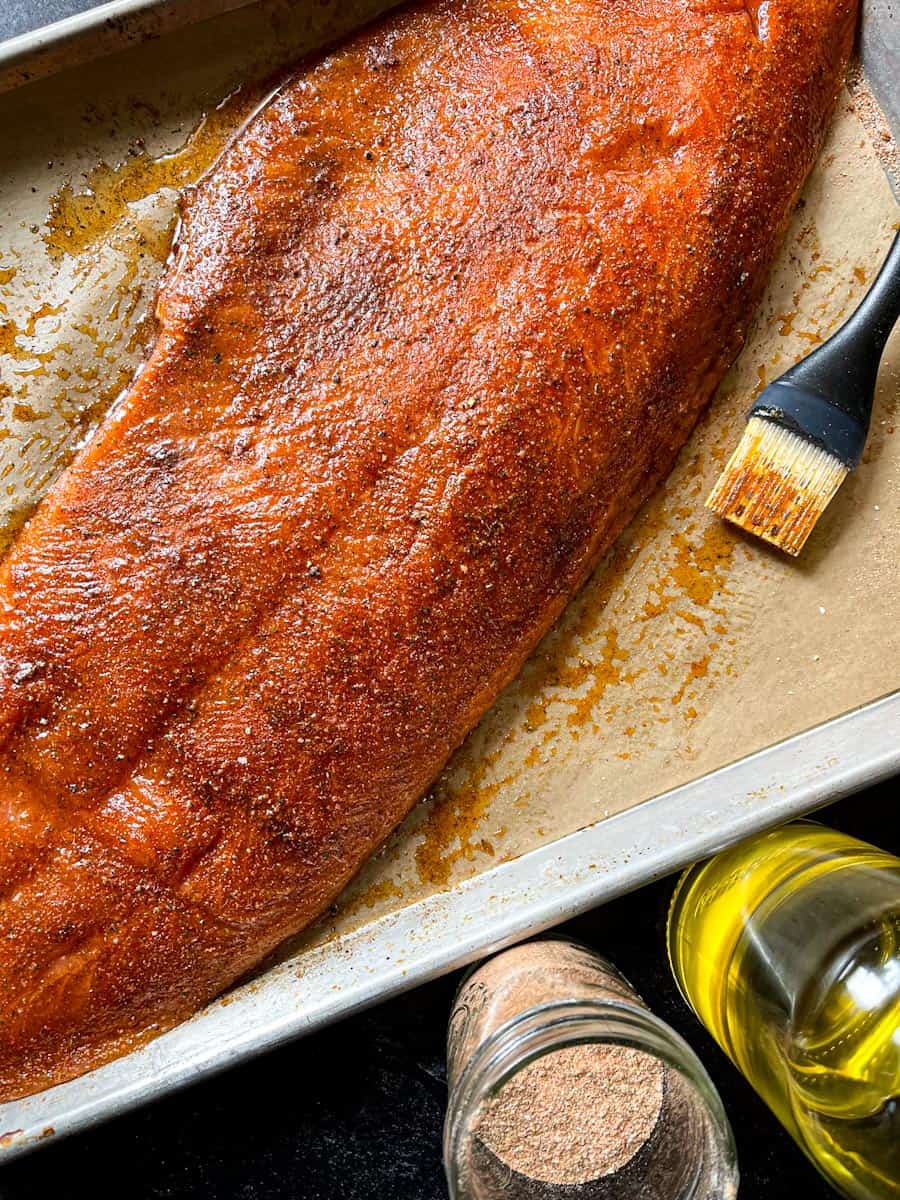
The Recipe Rundown
- Prep the salmon: Let the salmon sit at room temperature for about 30 minutes while the oven preheats to 300°F.
- Season: Drizzle with avocado oil and sprinkle generously with all-purpose seasoning.
- Bake low and slow: Roast for about 20 minutes, or until the salmon reaches your preferred doneness.
- Rest and finish: Let it rest for 10 minutes, then finish with plenty of fresh lemon juice and serve.
Swaps & Variations
The low-and-slow method works with all kinds of flavors, so keep the salmon simple or change up the seasoning with what you love.
- Lemon + garlic: Add grated garlic, lemon zest, and a few pats of butter before baking.
- Fresh herbs: Finish with dill, parsley, chives, or a combination while the salmon is still warm.
- Cajun: Swap the all-purpose seasoning for your favorite Cajun blend for a little extra spice.
- Honey-Dijon: Brush the salmon with a simple mixture of Dijon and honey before baking for a sweet and savory variation.

Tips & Tricks
A few little details will ensure your oven-baked whole salmon filet comes out buttery and succulent every time!
- Pat the salmon dry: Remove excess moisture before adding the oil and seasoning so everything coats the fish evenly.
- Keep the skin on: Bake the salmon skin-side down. The skin helps protect the delicate flesh from the heat and makes the whole filet easier to handle.
- Use a thermometer: Thickness varies considerably from filet to filet, so start checking early rather than relying solely on the 20-minute cook time.
- Don't overcook it: Salmon continues to cook slightly after it leaves the oven, so pull it when it reaches your preferred doneness.
- Finish with lemon: Add the fresh lemon juice after baking so that bright flavor stays fresh and doesn't get lost in the oven.
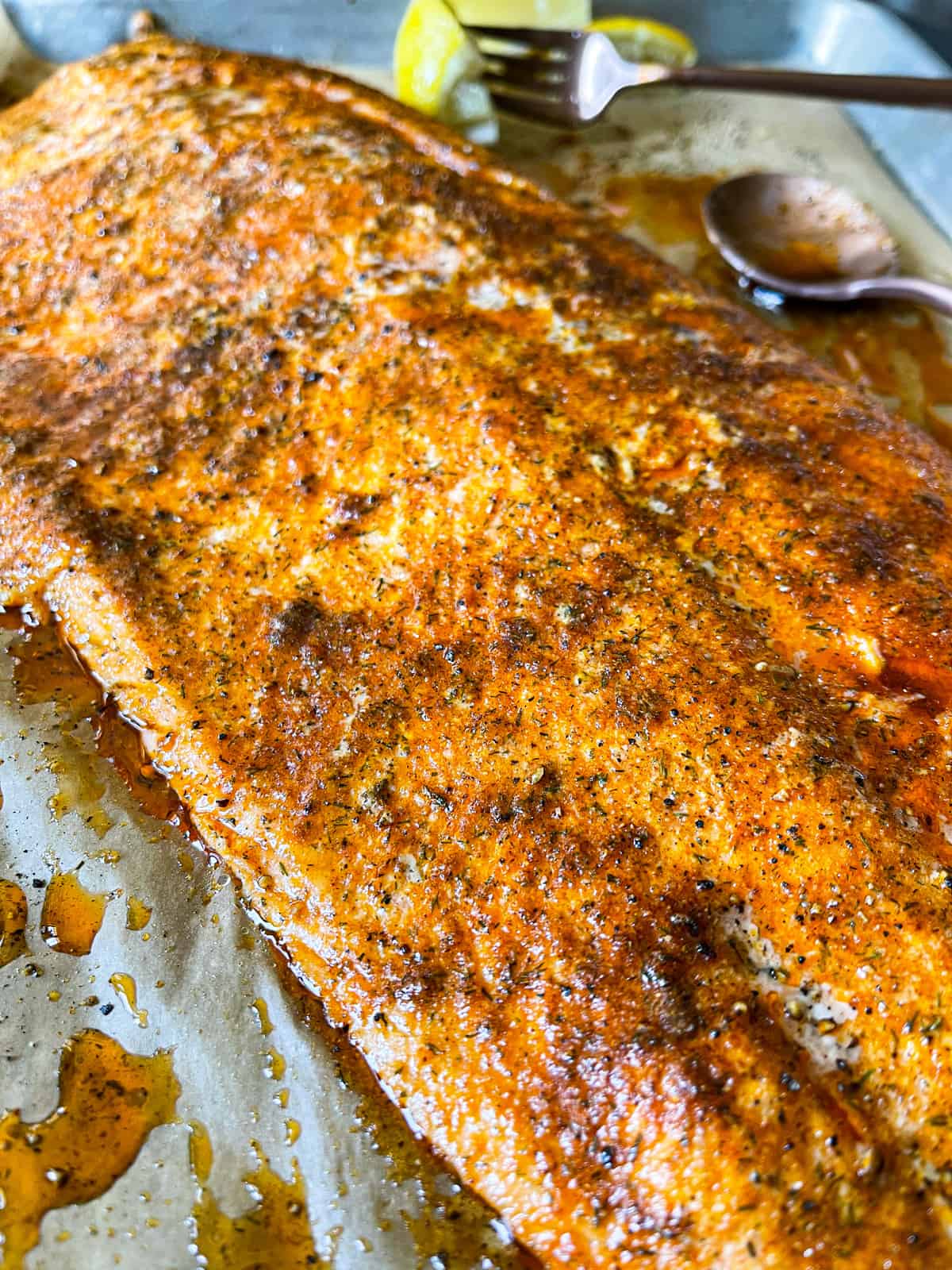
Oven-Baked Whole Salmon Recipe
Equipment
Ingredients
- 2 tablespoon avocado oil
- 2-3 tablespoon all-purpose seasoning
- 2 lb whole skin-on salmon filet
- 1 lemon
Instructions
- Remove the salmon from the fridge and let it rest on countertop for approximately 30 minutes.
- Drizzle salmon with avocado oil and sprinkle with all-purpose seasoning.
- Bake salmon in a preheated 300° oven for approximately 20 minutes.
- Remove from oven and let rest 10 minutes.
- Finish with a liberal squeeze of lemon.
- Serve and enjoy!
Notes
- 2 tablespoon kosher salt
- 2 tablespoon granulated garlic
- 2 tablespoon granulated onion
- 2 tablespoon smoked paprika
- 1 tablespoon dried dill weed
- 1 tablespoon ground coriander
- 1 tablespoon fresh ground pepper
- red chili flakes, optional
Nutrition
Make It A Meal
Keep dinner just as simple with an easy side or two:
- Creamy Polenta: A cozy, creamy side that's especially good with the buttery salmon.
- Simple Green Salad: Fresh and crisp with a lemon vinaigrette to balance the richness of the fish.
- Roasted vegetables: Asparagus, broccoli, green beans, or zucchini are all easy options.
- Buttered Noodles: Simple, family-friendly, and perfect when you want something a little more substantial.
Storage & Reheating
- Store leftover Oven-Baked Salmon in an airtight container in the refrigerator for up to 3 days. Enjoy it cold or reheat gently in the microwave or a low oven just until warmed through.
recipe testing notes & trouble shooting
- A whole filet cooks more evenly at 300°F: The gentle heat gives the thicker center time to cook without drying out the thinner edges. Filet thickness varies, so use the cooking time as a guide and start checking around 20 minutes.
- Individual portions work, too: Use the same 300°F method, but begin checking smaller portions around 12–15 minutes since they'll cook faster than a whole side.
- Frozen salmon is fine: Thaw it completely in the refrigerator and pat it very dry before adding the oil and seasoning.
- Don't chase a perfectly clean-looking filet: You may still see some white albumin on the surface even with low-temperature roasting. It's completely normal and doesn't mean the salmon is ruined.
- Doneness is personal: For food safety, the USDA recommends cooking fish to 145°F. Salmon will become firmer and more well-done as its internal temperature rises, so use an instant-read thermometer if you want consistent results.
More Easy Salmon Recipes You'll Love
If salmon is a regular on your dinner rotation, try these easy favorites next:
- Soy Ginger Salmon: A quick 15-minute salmon dinner with a simple savory-sweet soy ginger sauce.
- Thai Red Curry Salmon: Tender salmon simmered in a creamy red curry sauce for an easy 30-minute dinner.
- Greek Salmon Salad: Salmon, crisp vegetables, and a creamy dill feta dressing for a fresh, satisfying meal.
- Salmon Sushi Bowls: An easy way to turn salmon into a customizable rice bowl with all your favorite sushi-inspired toppings.
Who’s Stirring the Pot?
Hi, I’m Ruth—recipe developer, comfort-food creator, and the voice behind Rufus For Real. I specialize in cozy, doable, flavor-packed meals for real-life kitchens, and I’m a firm believer that breakfast, dinner, and everything in between should be simple, satisfying, and impossible to mess up.
You’ll find me sharing even more comfort-food goodness, kitchen tips, and behind-the-scenes chaos over on Instagram, Pinterest, Facebook, TikTok, and YouTube (@rufusforreal everywhere).
If you love approachable recipes with a whole lot of personality, pull up a chair—there’s always room at this table.
Happy Cooking!
-Ruth aka Rufus

mila says
Amazing
Rufus says
Thank you so much!!!