












Argentine chimichurri sauce is a fresh, garlicky herb sauce traditionally served with grilled steak. Made with parsley, garlic, oregano, vinegar, and olive oil, it’s bright, tangy, and incredibly simple to make in just minutes.
Let's get started!
Jump to:

Pull Up A Chair & Let's Chat!
It’s hard to overstate just how good a proper Argentine chimichurri sauce can be. Bright, garlicky, and packed with fresh herbs, it’s the kind of simple sauce that completely transforms whatever you put it on—especially grilled steak.
This is the kind of condiment you’ll find at an Argentine asado, spooned generously over perfectly cooked meat and passed around the table. It’s quick to make, incredibly versatile, and somehow tastes even better after it sits for a bit.
Once you make it, you’ll start finding excuses to put it on everything.
Why This Argentine Chimichurri Works
- Built on traditional Argentine ingredients – parsley, garlic, oregano, vinegar, and olive oil create the classic flavor base
- Perfect balance of acid and richness – vinegar brightens while olive oil smooths everything out
- Hand-chopped for the right texture – not blended, so it stays fresh, vibrant, and not muddy
- Ready in minutes – no cooking, just simple prep and a quick rest
- Even better over time – the flavors deepen as it sits, making it perfect to prep ahead

What You'll Need & Why
- Parsley: Flat-leaf parsley is traditional and gives chimichurri its signature fresh, herbaceous base.
- Garlic: Chimichurri should be boldly garlicky—don’t be shy here.
- Oregano: Dried oregano is more traditional than fresh and adds a deeper, earthy flavor.
- Red Wine Vinegar: This is the classic acid used in Argentine chimichurri and gives it that signature tang.
- Olive Oil: Use a good-quality oil—it carries all the flavor.
- Shallot (Optional): Not traditional, but adds a subtle sweetness and extra depth. Omit for a more classic Argentine chimichurri.
 Buy Now →
  Buy Now →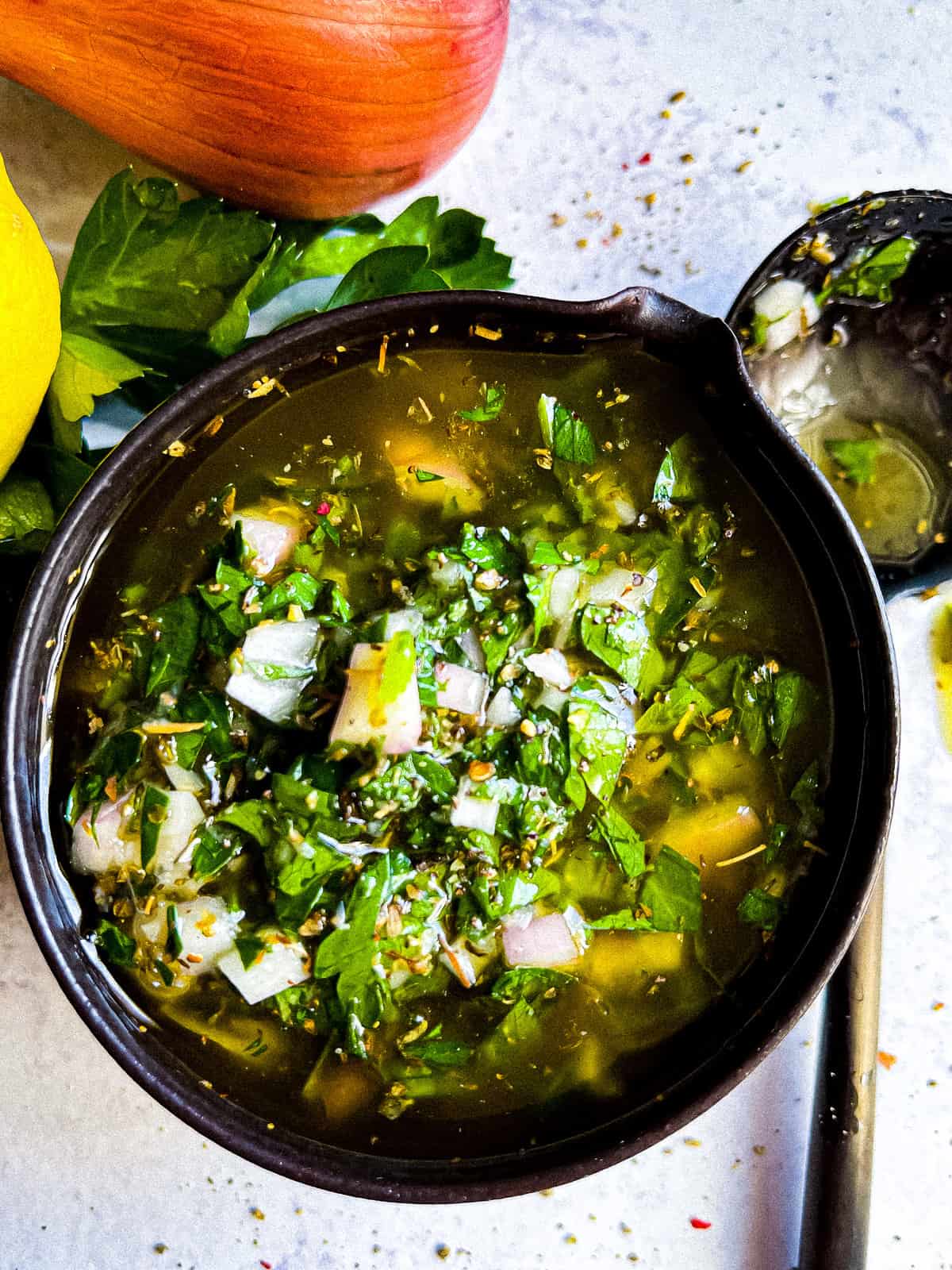
Swaps & Variations
While traditional Argentine chimichurri sauce is intentionally simple, there are a few popular variations and easy swaps you can make.
Traditional vs. Modern
- Classic Argentine chimichurri sauce – parsley, garlic, oregano, vinegar, and olive oil
- With shallot (optional) – adds subtle sweetness and depth
- Spicy chimichurri – increase red pepper flakes or add fresh chili
Herb Substitutions
Parsley is traditional, but you can mix in other herbs:
- Cilantro – brighter, slightly citrusy (not traditional)
- Chives – mild onion flavor
- Basil – slightly sweet and aromatic
Tip: Keep parsley as the base for best results.
Vinegar Options
- Red wine vinegar – traditional
- White wine vinegar – lighter
- Sherry vinegar – deeper, richer
Chimichurri Rojo
For a deeper, smokier version:
- Stir in finely chopped roasted red peppers
- Add paprika or smoked paprika
Tips For The Best Argentine Chimichurri
A few simple tips will help you get the best flavor and texture every time.
- Finely chop, don’t blend – Hand-cut herbs keep the texture fresh and prevent bitterness
- Let it rest before serving – 15–20 minutes helps the flavors come together
- Use good olive oil – It makes a noticeable difference in flavor
- Balance to taste – Add more vinegar for brightness or oil for a smoother finish
- Salt at the end – Adjust after everything is combined for better control
- Make ahead friendly – Tastes even better after a few hours in the fridge
How to Make Argentine Chimichurri
Chimichurri sauce comes together in just a few minutes, but how you combine the ingredients makes a difference.
- Start by finely chopping the parsley and garlic by hand—this keeps the texture fresh and prevents the sauce from becoming overly blended or bitter.
- Stir the herbs together with oregano, chile, salt, and vinegar, then let it sit briefly to mellow the garlic and develop flavor. Finish by adding olive oil and adjusting to taste.
- Let the sauce rest for at least 15 minutes before serving so everything can fully come together.


Chimichurri Sauce Recipe
Equipment
Ingredients
- 1 cup parsley, minced
- ½ cup extra virgin olive oil
- 3-4 cloves garlic, minced
- 3 tablespoon red wine vinegar
- 1 tablespoon dried oregano
- 1 teaspoon kosher salt
- ½ tsp fresh ground pepper
- ⅓ cup shallots, minced optional
Instructions
- Mix all above ingredients to incorporate. Store in sealed container the fridge. Enjoy on everything!
Nutrition
How to Use Chimichurri Sauce
Chimichurri is traditionally served with grilled meats, but it works just as well across a wide range of dishes. Here are some of my favorite ways to use it:
- With grilled or seared steak – Spoon it over steak or try it with something like your steak tacos or a hearty steak salad
- On chicken – Drizzle over roasted or grilled chicken for an instant flavor boost
- With seafood – Especially good with salmon, shrimp, or simple baked fish
- With pork – Perfect with dishes like my sheet pan pork tenderloin with chimichurri
- On sandwiches – Swap it in for mayo on a steak sandwich or roasted pork sandwich for a fresh, herby kick
- With roasted vegetables – Toss with roasted potatoes, cauliflower, or mixed veggies
- As a dip or drizzle – Great with crusty bread, eggs, or anything that needs a punch of flavor
Storage
Chimichurri stores well and actually improves in flavor as it sits.
- Stir before using – the ingredients will naturally separate
- Refrigerator: Store in an airtight container for up to 4–5 days
- Bring to room temperature before serving – the olive oil will solidify in the fridge
Can You Freeze Chimichurri?
Yes—chimichurri freezes surprisingly well.
- Freeze in small portions (ice cube trays work great)
- Store frozen for up to 2 months
- Thaw in the refrigerator or at room temperature
Note: The texture may soften slightly after freezing, but the flavor holds up well.

You Asked, I Answered
What does chimichurri taste like?
Chimichurri is bright, garlicky, and slightly tangy with a fresh, herb-forward flavor. It’s balanced by the richness of olive oil and the acidity of vinegar.
Is chimichurri gluten-free, dairy-free, and vegan?
Yes—chimichurri is naturally gluten-free, dairy-free, and vegan.
Is chimichurri spicy?
Chimichurri is typically mild, but you can adjust the heat by adding more or less red pepper flakes or fresh chili.
Who’s Stirring the Pot?
Hi, I’m Ruth—the recipe developer and comfort-food enthusiast behind Rufus For Real. I believe dinner should be the best part of your day, not the most stressful one. That’s why I focus on "no-drama" meals that are simple, satisfying, and impossible to mess up in a real-life kitchen.
I want to hear from you! How did you like my Argentine Chimichurri Sauce?! Let me know in the comments below—I read every single one!
You’ll find me sharing even more comfort-food goodness, kitchen tips, and behind-the-scenes chaos over on Instagram, Pinterest, Facebook, TikTok, and YouTube (@rufusforreal everywhere).
If you love approachable recipes with a whole lot of personality, pull up a chair—there’s always room at this table.
Happy Cooking!
-Ruth aka Rufus
Rufus says
This Chimichurri is absolutely delicious and even easier to make!